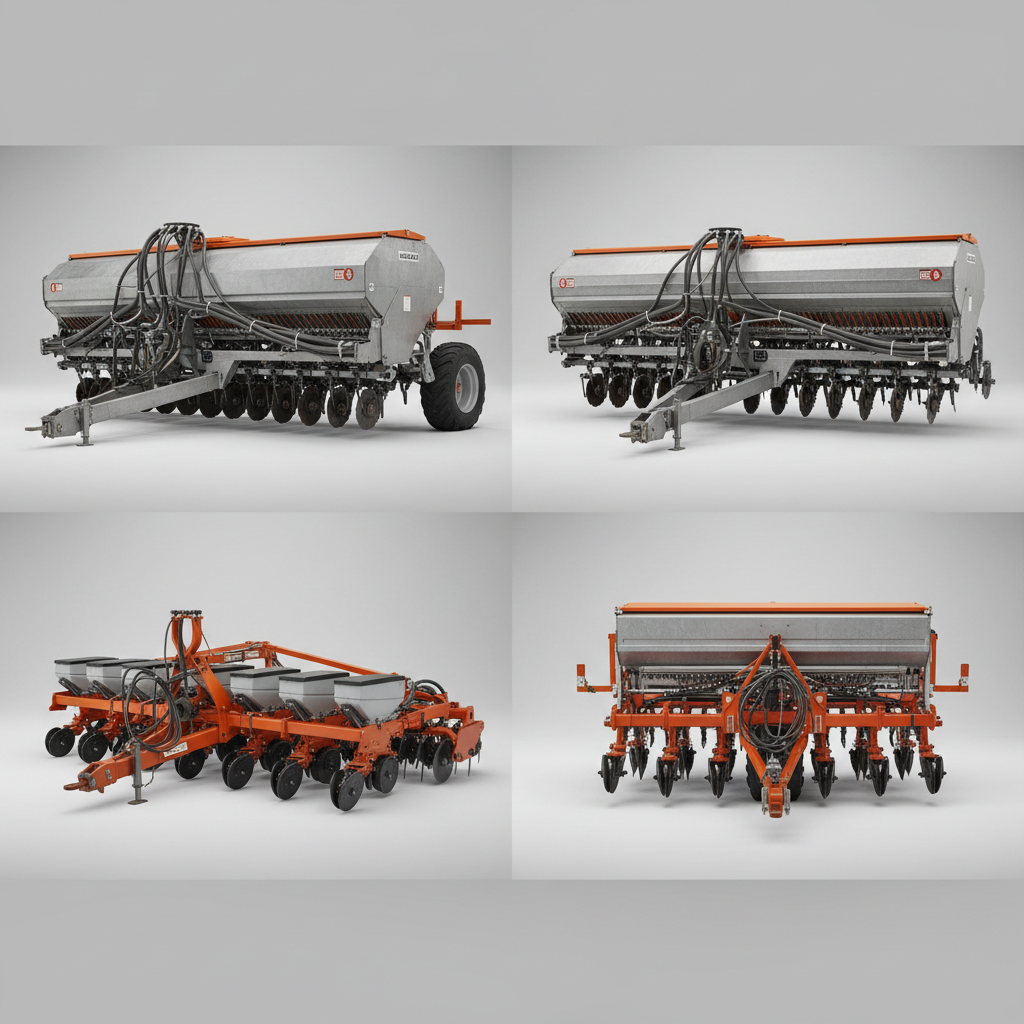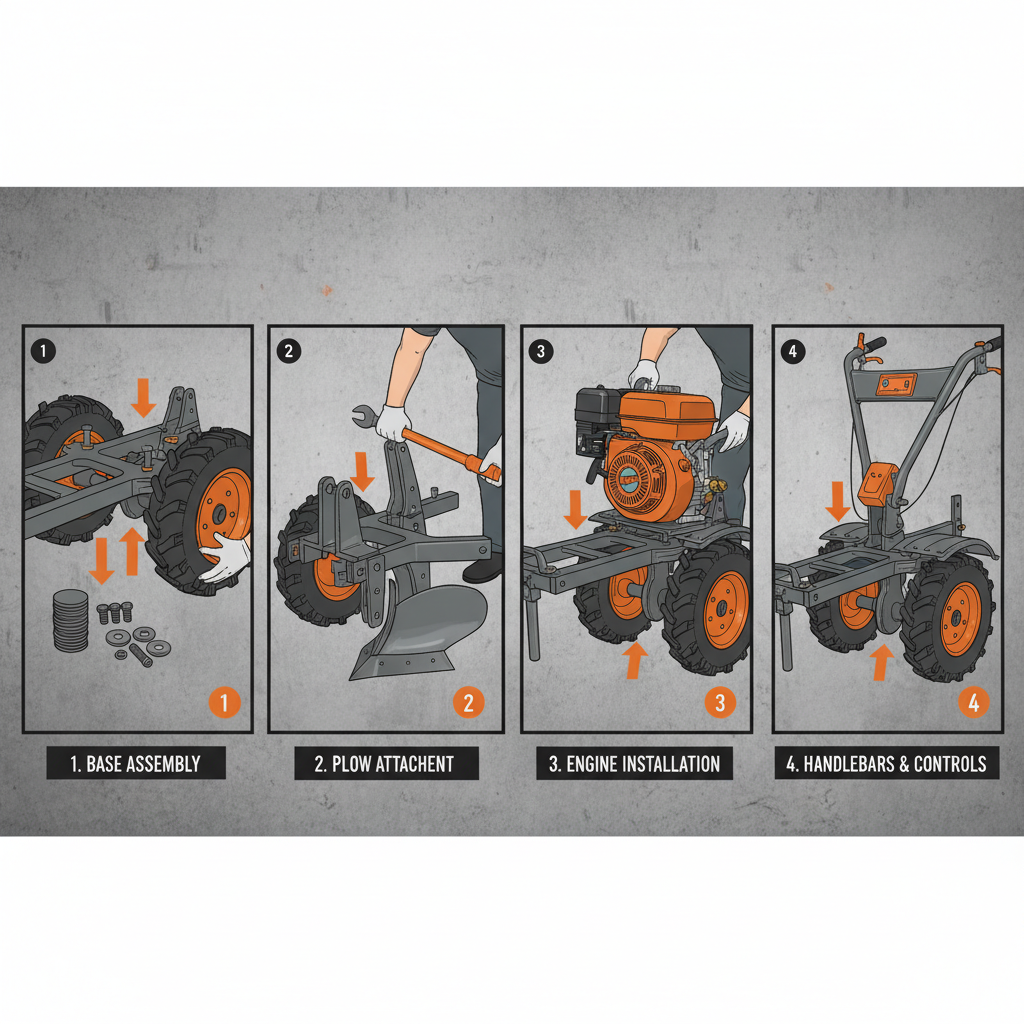
When evaluating the rotary cultivator price, buyers must look beyond the initial sticker cost and consider the total value proposition. In modern agriculture, the cost of equipment is balanced against its ability to integrate multiple functions—such as seeding, tillage, and fertilization—into a single operation. Understanding the pricing drivers helps farm managers optimize their capital expenditure while ensuring they acquire machinery capable of meeting specific soil and crop requirements.
The primary challenge for today's growers is the rising cost of inputs and labor, which makes efficiency a non-negotiable requirement. Traditional multi-pass planting methods not only increase fuel consumption but also lead to excessive soil compaction, which negatively impacts long-term yields. Investing in high-precision equipment can mitigate these risks, but the variability in market pricing often leaves procurement teams uncertain about the optimal balance between luxury features and functional necessity.
This guide provides a comprehensive analysis of the factors influencing rotary cultivator price and the technical specifications that justify higher investment levels. By examining the intersection of precision seeding technology, durability, and operational efficiency, readers will learn how to evaluate equipment ROI and select a solution that aligns with their specific agricultural scale and sustainability goals.

1Understanding the Value Drivers of Rotary Cultivator Pricing

The rotary cultivator price is not a static figure but a reflection of the machine's engineering complexity and intended durability. A significant portion of the cost is attributed to the materials used; for instance, high-grade steel frames and corrosion-resistant components are essential for equipment that must withstand harsh field conditions across diverse climates. When a machine integrates tillage, seeding, and fertilization, the complexity of the drive systems and the precision of the metering units drive the price upward.
Furthermore, the capability of the machine to handle various crop types—from grains like wheat and corn to oilseeds and vegetables—adds versatility that justifies a premium. A universal seeder reduces the need for multiple specialized machines, thereby lowering the overall equipment footprint and reducing long-term storage and maintenance costs.
Ultimately, the most expensive equipment is not necessarily the best, but the one that provides the highest "Information Gain" per acre. Buyers should focus on how the machine's specific features, such as adjustable seeding depth (1 to 10 cm), directly correlate to the expected increase in germination rates and crop uniformity.
2Core Technical Features Influencing Equipment Cost
At the heart of high-value agricultural machinery is the seed metering system. Modern precision seeders utilize either hydraulic or electric drives to ensure that each seed is placed with absolute consistency. This level of accuracy eliminates the common industry problem of over-seeding or under-seeding, which can waste significant amounts of expensive seed stock and lead to uneven crop growth.
Another critical cost driver is the integrated fertilizer distributor. By delivering nutrients directly to the seed zone—a process known as starter fertilizer placement—the machine ensures that young plants have immediate access to essential nutrients. This targeted delivery reduces overall fertilizer usage and minimizes the environmental impact of nutrient runoff into local waterways.
Finally, the inclusion of a soil tillage component and a press wheel ensures that the soil is prepared and firmed in a single pass. The press wheel is particularly vital as it retains moisture around the seed, which is critical for germination in arid conditions. These integrated mechanical stages are what distinguish a professional-grade combined seeder from basic equipment.
3Operational Applications and Scenario-Based Selection
Selecting the right equipment requires an analysis of the specific farming environment. For large-scale commercial plantations, the priority is often throughput and compatibility with high-horsepower tractors via 3-point hitches or pull-type designs. In these scenarios, the ability to cover vast acreage quickly while maintaining precision is the primary driver of the investment decision.
Small to medium family farms may prioritize versatility and ease of maintenance. For these users, a machine that can switch between different crop spacings (5 to 30 cm) is more valuable than a high-speed specialized unit. The goal is to maximize the utility of a single piece of equipment across multiple planting seasons and different crop varieties.
Operational success also depends on the integration of telemetry. GPS guidance allows for precise row alignment, which prevents overlapping and gaps in the field. This technical capability not only improves crop yields but also simplifies record-keeping for sustainability certifications and government compliance.
4Efficiency Metrics: Quantifying the Return on Investment
To justify the rotary cultivator price, operators must calculate the reduction in operational costs. The most immediate saving comes from the "one-pass" system. By combining four separate processes—tillage, seeding, fertilization, and pressing—into one pass, farmers significantly reduce fuel consumption and tractor engine hours.
Beyond fuel, the reduction in soil compaction is a critical, though less visible, metric. Every time a heavy tractor passes over a field, it compresses the soil, hindering root penetration and water infiltration. Reducing four passes to one protects the soil structure, leading to better long-term productivity and health.
rotary cultivator price Performance Metrics
When analyzing the data, the reduction in input waste (seeds and fertilizers) often pays for the equipment's price premium within a few growing seasons. For instance, a 20-25% reduction in fertilizer waste not only lowers costs but also aligns the farm with sustainable agricultural practices.
5Procurement Strategies for Agricultural Machinery
Procuring high-end agricultural machinery requires a shift from "lowest price" to "lowest total cost of ownership (TCO)." This involves evaluating the lifespan of the components, the availability of spare parts, and the quality of the manufacturer's support. Heavy-duty steel construction is a prerequisite for ensuring the machine does not require frequent, costly structural repairs.
Buyers should also consider the scalability of the technology. Equipment that can be upgraded with new GPS modules or telemetry software provides better long-term value than a "closed" system that becomes obsolete as technology advances. Digital interfaces that allow for real-time monitoring of seeding rates are now becoming standard requirements for professional operations.
Finally, it is essential to verify the manufacturer's track record in your specific region. Equipment used in the clay-heavy soils of Europe may require different configurations than those used in the sandy soils of Africa or South America. Selecting a partner like Langning, who provides exclusive solutions for different soils, reduces the risk of operational failure.
6Technological Trends in Precision Sowing Equipment
The future of planting is moving toward fully autonomous and data-driven systems. We are seeing a transition where machinery not only executes the planting but also analyzes the soil in real-time, adjusting the seed depth and fertilizer dosage on the fly. This "variable rate application" is the next frontier in increasing crop yields while reducing environmental footprints.
Another significant trend is the integration of conservation agriculture, specifically no-till or reduced-till systems. Advanced combined seeders are being designed to cut through crop residue without the need for extensive prior plowing, which further reduces carbon emissions and prevents soil erosion.
As these technologies mature, the rotary cultivator price will likely be influenced more by software capabilities and sensor integration than by mechanical hardware alone. The ability to integrate with farm management software (FMS) will become a primary selection criterion for the next generation of agricultural enterprises.
7Comparative Analysis of Seeding Solutions
Choosing between a combined precision seeder and traditional separate machinery involves a trade-off between initial capital expenditure and operational efficiency. While the combined unit has a higher upfront cost, the cumulative savings in labor, fuel, and inputs usually outweigh the initial price gap.
The following table compares the operational characteristics of different planting approaches to help procurement teams make an informed decision based on their specific needs and budget constraints.
| Feature | Traditional Seeder | Combined Precision Seeder | Manual/Basic Tools |
|---|---|---|---|
| Field Passes | 3-4 Passes | 1 Single Pass | Multiple Manual Passes |
| Seed Accuracy | Moderate | Very High (Precision) | Low/Variable |
| Fertilizer Use | Broadcast (Wasteful) | Targeted (Efficient) | Manual Application |
| Soil Health | High Compaction | Low Compaction | Low Impact |
| Labor Cost | High | Low | Very High |
| Initial Price | Moderate | High | Low |
In conclusion, for any operation aiming for scalability and sustainability, the Combined Precision Seeder represents the most viable path forward. The alignment of technical precision with operational efficiency ensures a higher germination rate and a more predictable harvest.
Frequently Asked Questions
Conclusion
Investing in a high-precision combined seeder is a strategic decision that moves a farming operation toward greater efficiency and sustainability. While the rotary cultivator price may be higher than that of basic machinery, the ability to reduce field passes, minimize input waste, and protect soil health provides a compelling return on investment. By focusing on technical specifications such as seed metering accuracy and structural durability, operators can ensure they select a tool that maximizes yield and minimizes long-term operational costs.
For agricultural professionals and procurement teams evaluating suitable solutions for their specific soil conditions and crop needs, detailed product information and customized configurations can be reviewed at www.agriculturalmachinemfg.com.