
Seed placement is often the most underestimated variable in crop yield volatility. While soil quality and fertilization are frequently prioritized, the physical precision of how a seed enters the earth determines the uniformity of the entire crop stand.
The transition from traditional broadcasting to mechanized sowing has shifted the industry focus toward tighter tolerances in depth and spacing. For modern grain producers, the objective is no longer just "planting," but the strategic optimization of seed-to-soil contact to maximize germination rates across varying terrain.
Achieving this level of consistency requires a specialized approach to equipment selection, focusing on a precision products seeder that can adapt to diverse grain types and soil conditions.


Precision sowing is defined by the ability to control three primary variables: seed depth, seed spacing, and the seeding rate. In grain production—covering crops like wheat, corn, and barley—even a few centimeters of depth variation can lead to uneven emergence, leaving some plants vulnerable to frost or pests while others struggle with compacted soil.
The movement from manual or broadcast methods to a precision products seeder represents a shift toward "input optimization." By ensuring each seed is placed in its own ideal micro-environment, farmers can reduce the total amount of seed required per hectare without sacrificing total yield.
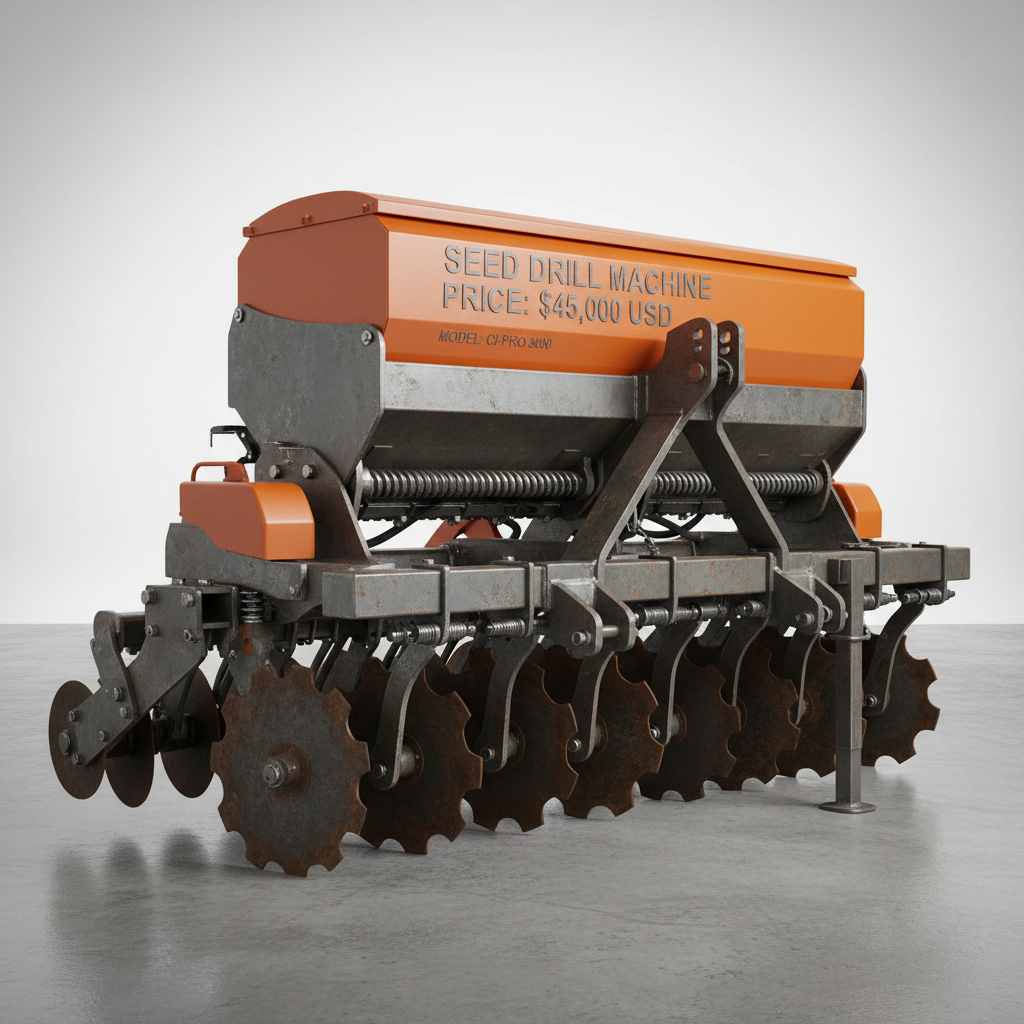
The heart of a high-efficiency seeder is the metering system. For grains, this typically involves adjustable gears or electronic controllers that regulate the flow of seeds from the hopper to the furrow. High-grade steel frames provide the necessary rigidity to keep these systems aligned, even when operating in muddy or rocky terrain, preventing the mechanical drift that often causes "skips" in the sowing line.
Beyond metering, the delivery system utilizes hardened steel sowing discs or tines. These components are designed to cut through surface residue and create a uniform furrow. To prevent seed exposure, a following mechanism—such as press wheels or harrows—immediately secures the seed, ensuring that the surrounding soil moisture is locked in for faster germination.
Versatility is managed through modularity. Modern systems allow for row spacing adjustments (typically between 15 to 45 centimeters) and hopper capacities ranging from 50 to 200 liters. This ensures the equipment can be scaled from small family plots to massive commercial enterprises without needing an entirely different machine for each crop type.
Germination is not merely a biological process but a mechanical one. The success of a crop begins with the quality of the seed-to-soil interface. If there are air pockets around the seed, moisture cannot be absorbed efficiently; if the soil is too compacted, the seedling cannot break the surface.
Uniform seed depth and consistent soil coverage directly correlate to a 10-18% increase in germination rates by eliminating competition between plants and protecting seeds from avian predators and temperature extremes.
This mechanical consistency is what distinguishes professional seeding equipment from basic tools. By integrating a covering mechanism that applies the correct amount of pressure, the seeder creates a stable environment that promotes rapid root development and a more uniform crop stand, which simplifies later weeding and harvesting stages.
The economic argument for upgrading to a precision products seeder is found in the reduction of waste and labor. Traditional methods often result in over-sowing, where expensive seeds are wasted in clusters, or under-sowing, leading to patchy growth. Precision metering can reduce seed waste by 15-25%, which provides a significant cost offset over a single growing season.
Time efficiency is equally critical. A tractor-mounted seeder can cover 1 to 3 hectares per hour, reducing the time required for sowing by up to 80% compared to manual labor. This allows farmers to hit the optimal planting window—a narrow timeframe where soil temperature and moisture are ideal—which is often the difference between a record harvest and a mediocre one.
The application of seeding technology varies by operation size. A small-scale family farm (under 5 hectares) typically requires a compact 2-4 row seeder that can be operated by a low-horsepower tractor (approx. 20 HP). For these users, the priority is maneuverability and ease of maintenance, ensuring the machine can be stored and serviced without industrial facilities.
Conversely, large commercial operations (50+ hectares) prioritize throughput and data. These farms utilize 8-12 row units compatible with 100+ HP tractors. In these settings, the integration of GPS and digital displays becomes essential, allowing the operator to track coverage areas in real-time and adjust seeding rates on the fly to account for varying soil quality across vast acreage.
The industry is currently moving toward "site-specific" sowing. Rather than applying a uniform seeding rate across an entire field, emerging technologies allow for variable rate application. By integrating soil sensors and GPS, a seeder can automatically increase seed density in high-nutrient areas and decrease it in sandy or poor-quality patches.
This shift is driven by the need to reduce input costs while maximizing the potential of every square meter of land. The challenge lies in the complexity of the electronics; farmers are now balancing the need for precision with the desire for reliability. Mechanical simplicity remains a core value, which is why high-quality steel construction is still the baseline for any professional unit.
Looking forward, the integration of AI-driven soil analysis will likely automate the selection of seeding rates, removing the guesswork from the process. For companies like Hebei Langning International Trade Co., Ltd., the focus remains on creating exclusive solutions that bridge the gap between these advanced digital controls and the rugged physical requirements of diverse soil types.
Choosing the correct seeder is a trade-off between capacity, precision, and budget. A common error is purchasing a high-capacity machine that exceeds the tractor's horsepower or a basic mechanical model that lacks the precision required for small-seeded crops like barley.
Terrain also dictates the choice of components. Rocky soils demand hardened, wear-resistant tines, whereas heavy clay soils require press wheels rather than harrows to prevent excessive soil compaction. Weight distribution becomes a critical factor in hilly regions to ensure consistent depth on slopes.
Ultimately, the investment should be evaluated based on the projected increase in germination rates and the reduction in seed waste. A machine with a lifespan of 8-12 years, constructed from anti-rust treated steel, provides a far better long-term ROI than cheaper, plastic-based alternatives.
| Farm Profile | Recommended Row Count | Priority Component | Key Selection Factor |
|---|---|---|---|
| Small Family Farm | 2-4 Rows | Compact Frame | Maneuverability |
| Commercial Mid-Scale | 6-8 Rows | Adjustable Metering | Crop Versatility |
| Large Industrial | 8-12 Rows | GPS/Digital Display | Operational Throughput |
| Rocky/Hard Terrain | Model Dependent | Hardened Steel Tines | Wear Resistance |
| Clay/Wet Soil | Model Dependent | Press Wheels | Compaction Control |
| Hilly Terrain | Model Dependent | Weight Dist. System | Depth Consistency |
A traditional grain drill often focuses on volume and speed, which can lead to uneven seed spacing and depth. In contrast, a precision products seeder employs a sophisticated metering system—using adjustable gears or electronic controls—to ensure every seed is placed at an exact interval and depth. This reduction in "clustering" prevents competition between seedlings for nutrients and water, leading to a more uniform crop stand and higher overall yield.
Soil texture directly impacts tool wear and seed placement. In rocky or compacted soils, hardened steel tines are essential to resist abrasion and ensure the furrow is created without damaging the equipment. In wet, heavy clay soils, the focus shifts to the covering mechanism; press wheels are preferred over harrows because they provide the necessary seed-to-soil contact without causing excessive soil compaction, which can stifle root growth.
Yes, provided the seeder has an adjustable metering system and variable row spacing. Different grains have vastly different size and spacing requirements; for example, wheat requires a fine metering system for small seeds, while corn requires larger disc sizes. High-quality seeders offer spacing options (typically 15-45 cm) and adjustable gear ratios to accommodate these differences, eliminating the need for multiple specialized machines.
The ROI is realized through three main channels: seed savings, labor reduction, and yield increase. By reducing seed waste by 15-25% and increasing germination rates by 10-18%, the equipment often pays for itself within a few growing seasons. Additionally, the 70-80% reduction in sowing time allows for better labor allocation and ensures the crop is planted during the optimal weather window, further boosting harvest potential.
Longevity depends on preventing corrosion and wear. After each use, the hopper and metering system must be cleaned of debris to prevent clogs. Before every season, sowing discs and press wheels should be inspected for cracks or dull edges and replaced with genuine parts. Regular lubrication of the three-point hitch and metering gears is essential. Finally, storing the machine in a dry, covered area prevents the steel frame from rusting during the off-season.
For farms under 5 hectares, GPS is generally a luxury rather than a necessity, as the fields are small enough to manage with visual markers. However, for any operation where soil quality varies significantly across the plot, GPS and digital displays provide invaluable data on coverage and seeding rates. For most small farmers, a reliable mechanical model with high-grade steel construction offers the best balance of value and performance.
Precision in the sowing phase is the foundation upon which all subsequent agricultural efforts are built. By prioritizing consistent seed placement and reducing input waste, grain producers can stabilize their yields and significantly lower their operational costs.
Whether utilizing a compact unit for a family plot or a GPS-integrated system for a commercial enterprise, the core requirement remains the same: durable materials and precise metering. Investing in professional-grade equipment ensures that the potential of every seed is maximized, securing the productivity of the farm for years to come.